

Graphene's atomic structure (top) enables its superior water-repellent properties on car paint (bottom).
If you’ve worked in auto detailing or run a car care shop, you’ve probably heard how graphene coating spray outperforms traditional nano-ceramic options. But what exactly makes it better? It’s not just another buzzword cooked up by marketers—this thing’s got real science behind the shine. Let’s break it down in plain English—no PhD required, promise, so you can explain it to customers or pick the right product for your shelf.
Graphene is just a single layer of carbon atoms, arranged like a honeycomb. That tiny, simple structure gives it three big advantages over other coating materials:

The bonds between carbon atoms are super strong—yup, 200 times stronger than steel. Tony Stark would approve. But unlike rigid ceramic coatings, graphene stays flexible. That means it can flex without cracking—unlike your patience when waxing every weekend (a common issue with old-school resin coatings).
Graphene has extremely low surface energy—about 20 mN/m, compared to water’s 72 mN/m. Translated: Water just says ‘nope’ and slides right off like it’s late for a meeting, taking dirt with it. Nano-ceramic coatings? Their surface energy is around 45 mN/m, so water sticks more.
Carbon’s stable structure means graphene doesn’t react with acid rain, bird droppings, or UV rays. It blocks over 99% of UV light, which stops paint from fading. Nano-ceramic? Maybe 90%—still good, but not as tough.
A good graphene spray isn’t just pure graphene. It’s a mix of three key parts, each doing a job:

The layered formula of graphene coating spray: from paint base to protective additives.
| Ingredient | What It Does | Pro Tip for Sourcing |
|---|---|---|
| Graphene | Adds strength, water repellency, and UV protection | If it’s less than 0.5%, you’re basically paying extra for a sticker that says ‘graphene’. |
| Film-Forming Resin | Sticks the graphene to the paint and creates a smooth, even layer | Silicone-oxide resins work best—they bond well with graphene and don’t yellow over time. |
| Additives | Makes application smoother (no streaks—no panic) and adds that ‘Instagram filter’ shine | Look for wetting agents (for smooth sprays) and mild gloss enhancers (avoid overly shiny “plastic” looks). |
Let’s get real—you don’t need Einstein’s approval to understand this, but knowing how the coating works helps you sell it better:
When you spray it on, the resin soaks into tiny pores in the paint. The graphene sheets then lock into the resin, creating a “mesh” that’s hard to scratch.
The graphene’s honeycomb structure creates tiny bumps on the paint’s surface. Water can’t stick to these bumps—it just ghosts your paint like a bad date, instead of drying into water spots.
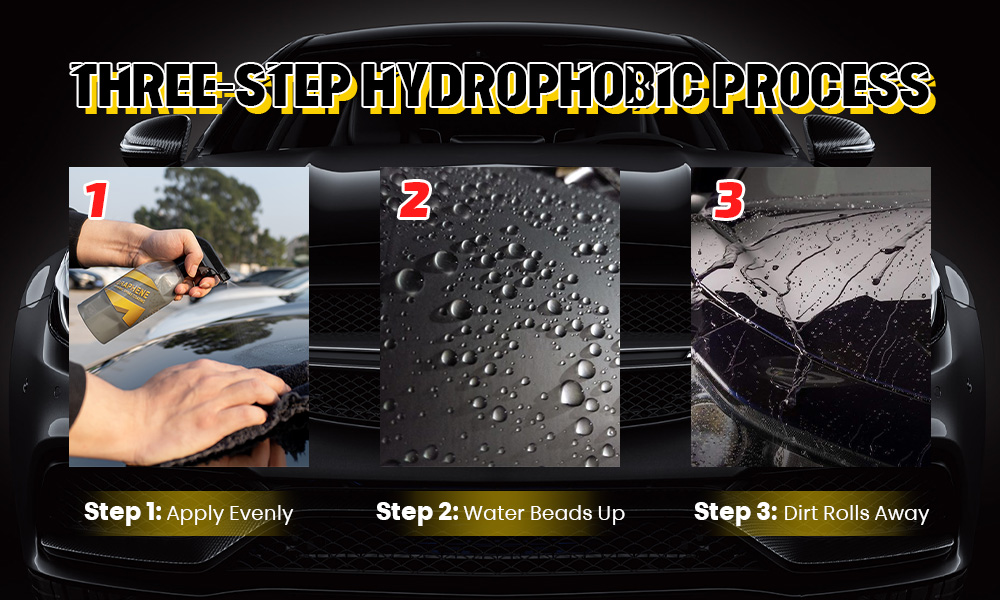
UV rays, acid rain, even tree sap—they all hit the graphene layer first, not the paint. Graphene doesn’t flake out easily—unlike some coatings and some people—so this protection lasts 6 months (nano-ceramic usually fades after 3).
The market’s full of “graphene” products that don’t deliver. Here’s how to spot the good ones:

3 key checks to ensure you’re getting a legitimate graphene coating spray.
Graphene coating spray isn’t just a fad—it’s the real deal. Your car’s paint will thank you (and so will your clients). It’s easier to sell when you understand the “why” behind it: for wholesalers, it’s a higher-margin product that customers will come back for (6-month reapplication cycles = repeat sales); for detailers, it’s faster to apply than ceramic coatings, so you can serve more cars.
Next time we’ll dive into application hacks—follow for the cheat codes to perfect shine.


